A chronograph is a watch with a built-in stopwatch. The difference with a chronometer, how to use the pushers and what a tachymeter and pulsometer do.
A chronograph is a watch with a built-in stopwatch. Besides telling the time, it measures elapsed time, from a few seconds to several hours. The word comes from the Greek chronos, time, and graphein, to write.
Chronograph or chronometer? A chronograph has a stop function. A chronometer is a watch whose movement has been officially tested for accuracy, in Switzerland by the independent COSC. A watch can be one, both or neither.
Using the pushers. The pusher at 2 o'clock starts and stops the chronograph; pressing again resumes it. The pusher at 4 o'clock resets the hands to zero, ideally only when the chronograph is stopped. A flyback chronograph is designed to reset and restart in one movement.
Tachymeter. This scale calculates speed over a known distance, usually one kilometre. Start at the beginning, stop at the end and read the average speed. Thirty seconds reads 120 km/h. It only works for measurements under a minute.
Pulsometer. Originally made for doctors, this scale is calibrated to a set number of beats, often 15 or 30. Count those beats, stop the chronograph and read the heart rate per minute. The Delma Continental Pulsometer is a fine example.
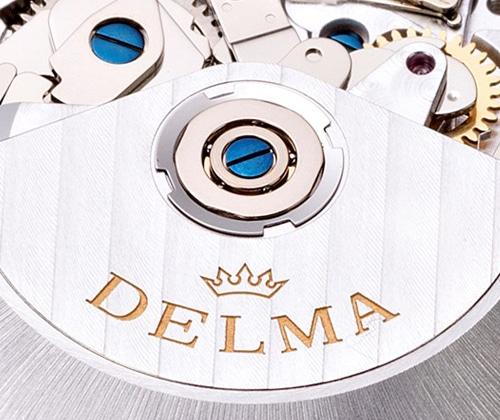
Quartz or automatic? Quartz chronographs are accurate, thin and low-maintenance. Mechanical chronographs are more complex, with a column wheel or cam regulating the functions, and are loved for that craftsmanship.
Delma chronographs. The range includes the Klondike Chronotec, Santiago Chronograph, Pioneer Chronograph, Commander Chronograph, Oceanmaster Chronograph, Heritage Chronograph and the Continental Pulsometer. Check each model's specifications for its movement and scales.