
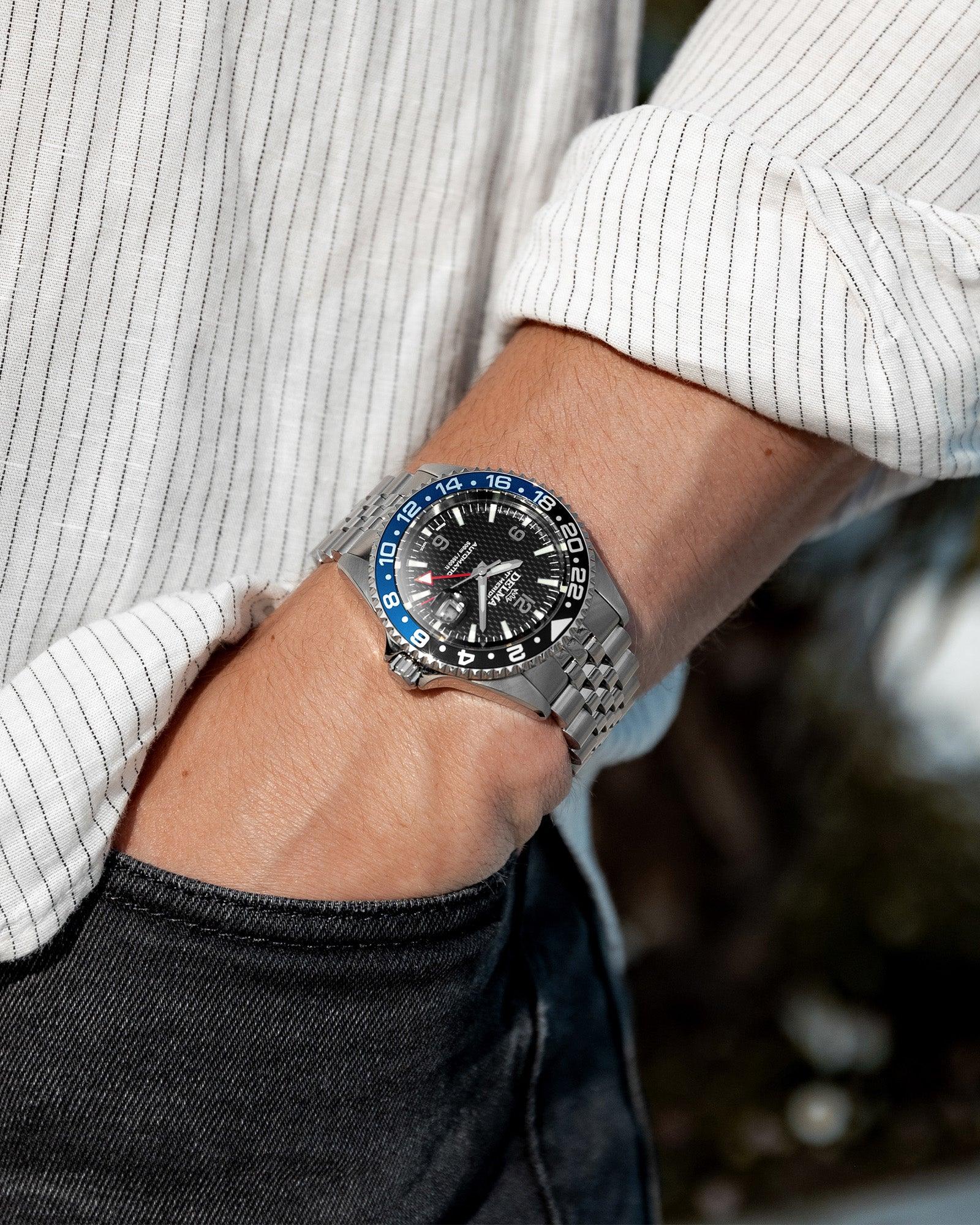
How an automatic watch works, how to wind it by hand and how to set time and date without stressing the movement. Plus maintenance tips.
An automatic watch needs no battery. It draws its energy from the movement of your arm. Here is how it works and how to wind, set and care for it.
How it works. A mainspring stores energy and drives the hands through a gear train, while the balance wheel releases that energy in even steps. A rotor, a semicircular weight, turns as you move and winds the mainspring. A slipping clutch prevents overwinding.
Power reserve. A fully wound watch keeps running for a set time when not worn, for many automatic movements somewhere between 38 and 80 hours. If it stops over a weekend, that is normal.
Winding by hand. Unscrew a screw-down crown first, then turn the crown clockwise in its first position. Twenty to forty turns is usually enough. Screw the crown back down afterwards to keep the watch water-resistant. A few automatic movements cannot be hand-wound.
Setting time and date. Pull the crown to the last position to set the time; on many movements the seconds hand stops. The middle position usually sets the date. Avoid changing the date between roughly 21:00 and 03:00, when the date mechanism is engaged. Set the hands to 06:00 first, adjust the date to yesterday, then advance the hands past midnight to the correct time.
Watch winder. Useful if you own several automatics, but not necessary. A stopped watch is not harmed.
Service. The oils in a mechanical movement age, so a periodic service is needed, often every five to seven years. Follow the brand's advice. Keep the watch away from strong magnets and never operate the crown underwater.
The Delma collection includes many automatic watches. Check each model's specifications for movement and power reserve.